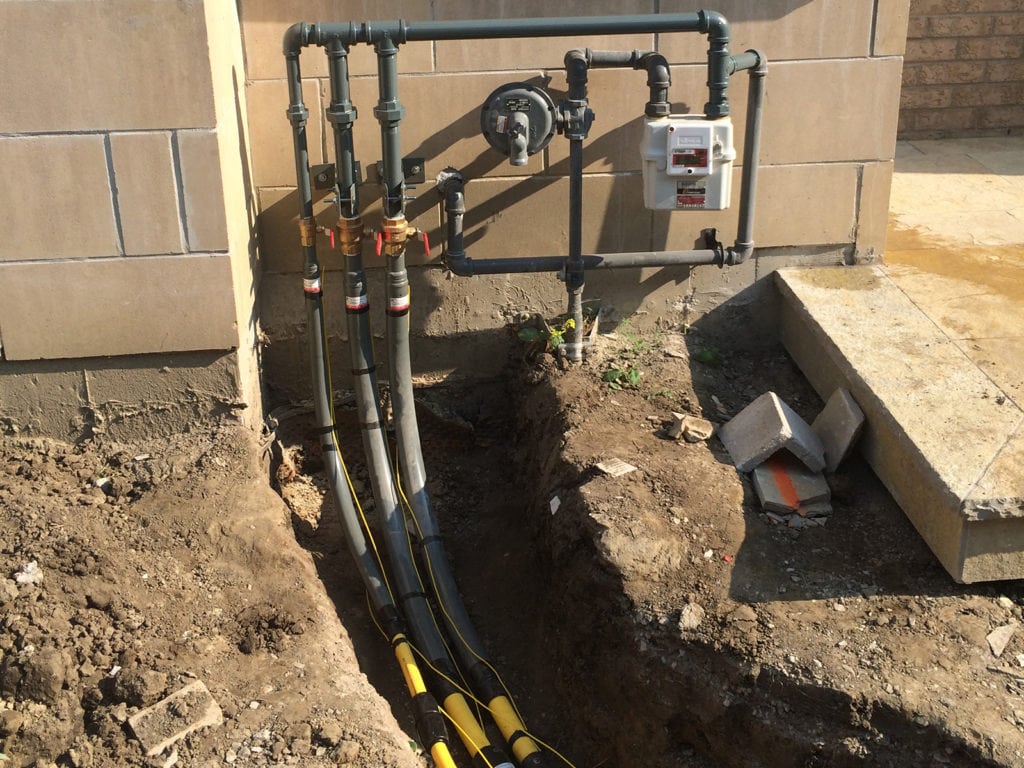
Underground Gas lines
The country’s local government usually decides how deep the natural gas lines can go. That’s why the depth varies around the globe and can be specific to even cities. In the United States, a gas line should be between 18 and 24 inches deep.
Most of the time, the main gas lines are at least 24 inches deep. The service gas lines are closer to the main lines and can be found by going 18 inches underground. The rules clearly state that natural gas lines cannot be less than 18 inches deep in California. In New York and New Jersey, it’s at least 24 inches.
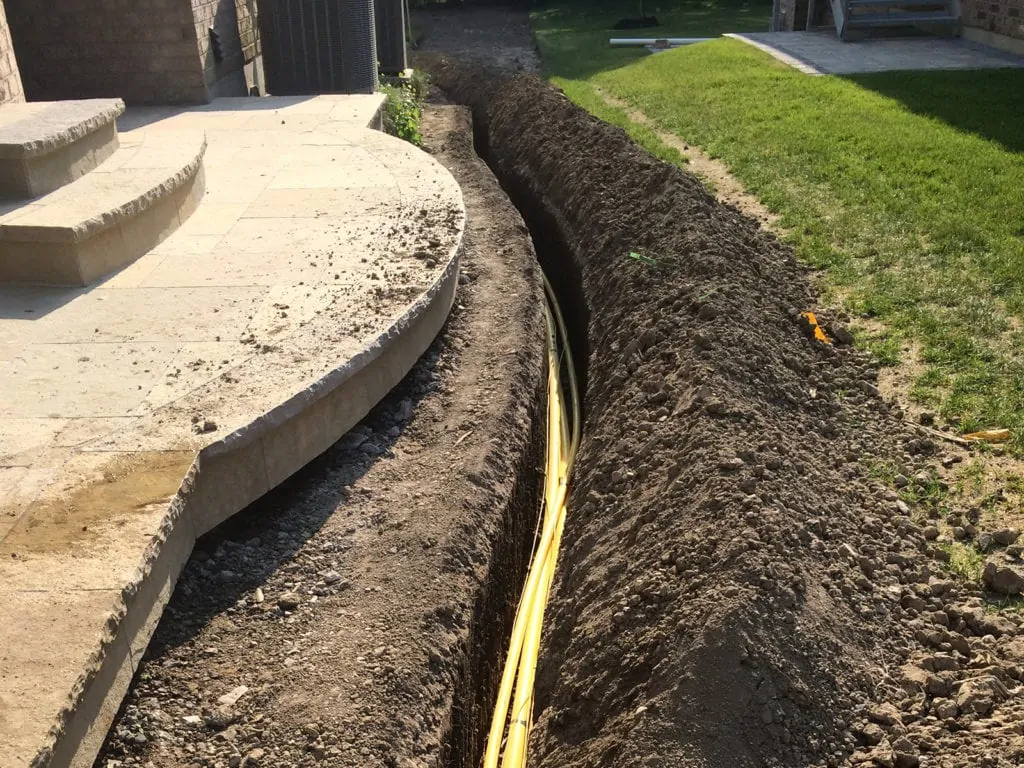
- You shouldn’t bury the gas lines any less deeply than the law requires.
- Gas lines that aren’t deep enough are more prone to damage.
- Prioritize the laws in your area to ensure your family’s safety and make it easy to fix gas lines in an emergency.
- Professionals should only put in gas lines.
- All gas lines must meet the rules for building in the area.
- Educate yourself about gas lines and learn how to locate one.
The depth is very necessary in order to avoid any kind of damage to gas lines. Most gas lines in the US tend to be shallower when they are closer to private property. The chance that someone will hit a gas line by accident goes up when there are more people in an area and when there is more traffic or work.
A serious crash might take a few inches of asphalt and concrete out of the road or street, but that’s not even close to being deep enough to reach the gas lines, usually buried at least two feet down. So, even a mistake won’t cause a leak or explosion. To get to that depth, you need to use specialized drilling tools, which are usually only used by people who know how to use them right and won’t damage the gas line.