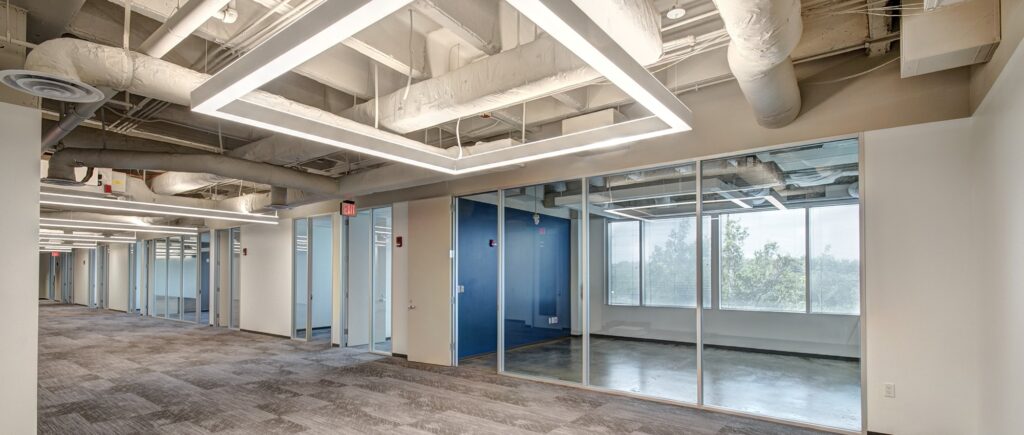
Tenant Improvements

Tenant Improvements are the improvements made to a leased premise by or for the tenant. Tenant Improvements can be made in addition to or on top of any existing finishes in the premises. Or, a Tenant may choose to demolish or gut a space back to a Shell condition and then rebuild the space with a design, finishes and improvements that are specific and unique for their business.
It is very common for a tenant to receive a Tenant Improvement Allowance from the landlord as a concession for the tenant to lease a space, especially with new leases.
A Tenant Improvement Allowance is a sum of money that the landlord will pay or reimburse to the tenant or its contractor to improve the space with finishes that benefit the tenant’s objective of occupying the space. Most landlords will stipulate that the Tenant Improvement Allowance must be spent on improvements that are fixed to the premises as opposed to furniture, fixtures or equipment. Landlords may choose to pay the Tenant Improvement Allowance in one lump sum check at the completion of the build out process and once the tenant occupies the premises; or, through any number of checks to the tenant during various stages of the build out.
The most common practice is that the landlord pays for the commercial leasehold improvements with a tenant improvement allowance and if the cost of improvements exceeds that TI allowance, you pay the difference. It is usually expressed in a per-square-foot or total dollar sum, and this amount is decided upon during lease negotiations. Landlords do not have to offer any type of TI allowance, especially if the lease market is strong, but in recent years it has become a popular enticement for leasing space.