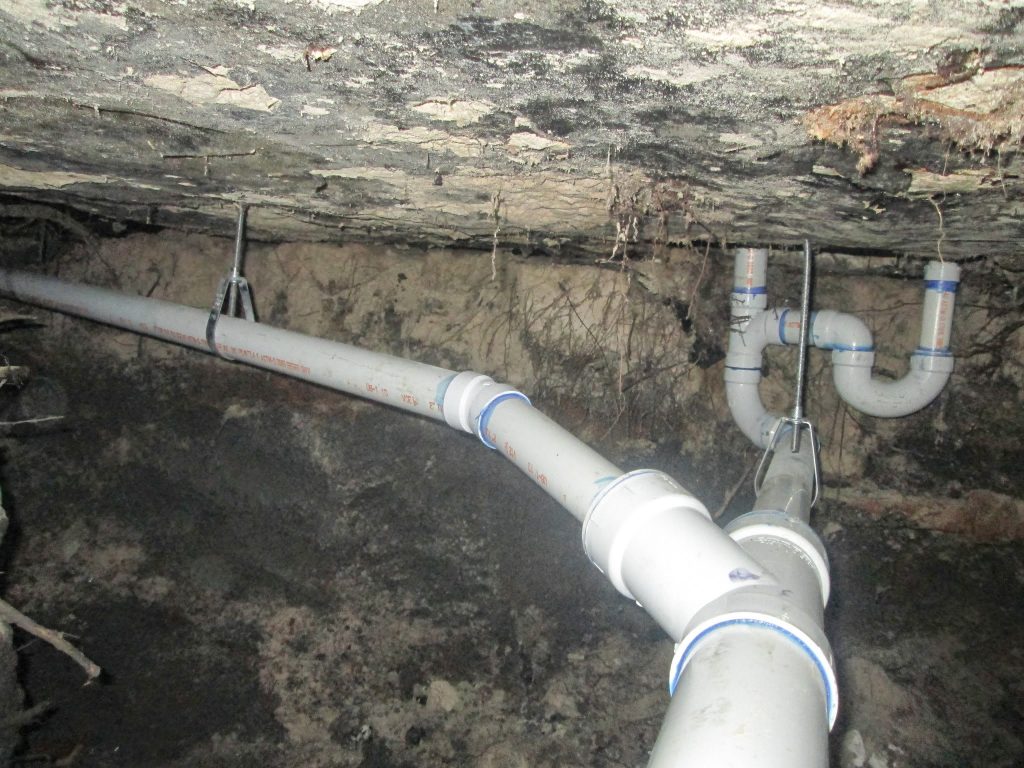
Under slab tunneling for Plumbing repairs
It’s important to know where the plumbing is failing. All tunneling jobs depend upon reaching a particular location or locations under the home.
A plumber would typically be the one to figure this out if under-slab leaks are your only repair issue. However, if the under-slab leaks were discovered or are part of a foundation repair project, the foundation repair team can also be the ones to determine where the problem points are located.

What happens to tunnels under my home after my house is lifted?
Generally, your tunnels are connected to a drainage system used to keep water from accumulating under your home. In some cases, your tunnels will be connected to a gravity drain, in others, to a sump pump. Tunnels should be left unfilled to facilitate any future plumbing repairs (after all having gone through the expense of digging tunnels, you might as well get full advantage of them) or foundation warranty work.
What happens if the tunnels collapse?
Tunnels are dug to allow pilings to be installed. Pilings are used to hold up your foundation. Once pilings are installed, your home is no longer sitting on the soil. It is simple, since the pilings are holding up your home, it does not matter if the walls of your tunnels crumble.
How do you dig tunnels?
The old fashioned way, we dig your tunnels by hand. This is extremely difficult work, but is worth the effort.
Worried that tree roots may be destroying your sewer lines? Have your pipes begun to leak unhealthy sewage under your property? Don’t wait a moment longer to call on the team at Mr. Rooter Plumbing! We fix cracked, broken, deformed, and collapsed sewer pipes in a fast and efficient manner. While it may be easy to tell a serious sewer pipe problem has happened in some cases, other cases may not be so obvious.